In a move that has sparked both applause and controversy across the global stage, U.S. President Donald Trump is actively engaging nations often labeled as sympathetic to Hamas in his ambitious push for lasting peace in Gaza. As the architect of the fragile October 2025 ceasefire between Israel and the Palestinian militant group, Trump has expanded his vision through the newly formed “Board of Peace,” inviting a diverse array of countries—including those with historical ties to Hamas—to oversee reconstruction and governance in the war-torn enclave. This strategy, while praised by some as pragmatic diplomacy, has raised alarms among Israeli leaders and Western allies who fear it could empower extremist elements.
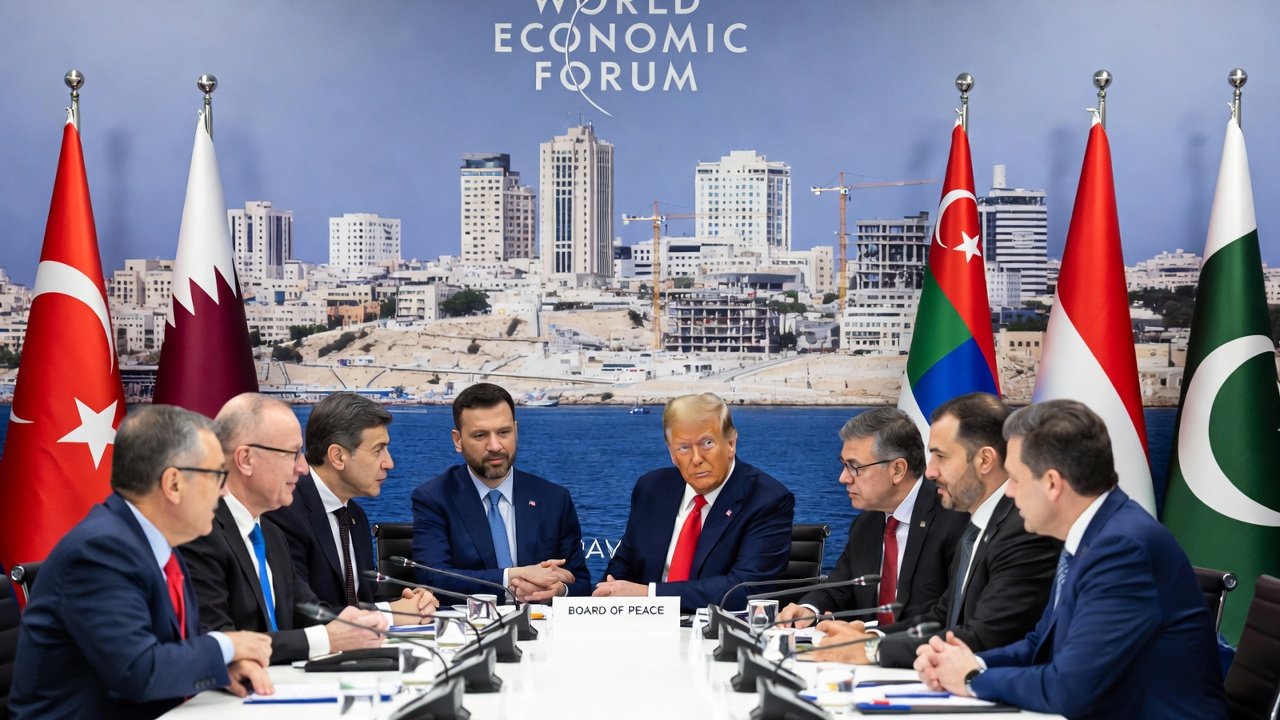
The Board of Peace, unveiled in early January 2026, was initially conceived as a supervisory body for the next phase of Trump’s 20-point Gaza peace plan, which includes disarming Hamas, deploying an international security force, and rebuilding the devastated territory. However, the initiative has quickly evolved into a broader platform, with invitations extended to over two dozen nations, some of which have been accused of harboring or supporting Hamas operatives. Turkey and Qatar, in particular, stand out as key invitees. Turkish President Recep Tayyip Erdogan, whose government has hosted Hamas leaders in Istanbul, discussed Syria and Gaza directly with Trump in a recent call, expressing Turkey’s willingness to coordinate on the board. Similarly, Qatar—home to Hamas’s political bureau in Doha—has been integral to mediation efforts and is now poised to play a formal role in Gaza’s transitional governance.
Trump’s rationale appears rooted in leveraging these nations’ influence over Hamas to enforce the ceasefire and facilitate reconstruction. In October 2025, shortly after the truce took effect, Trump claimed that several Middle Eastern allies had offered to deploy forces into Gaza to “straighten out” Hamas if violations occurred. Indonesia, another Muslim-majority country with no formal ties to Israel, was singled out for praise by Trump and has expressed interest in contributing troops to a future Gaza force. Pakistan, too, has backed the plan, with Prime Minister Shehbaz Sharif highlighting Trump’s commitment to resolving the conflict. These engagements suggest a calculated effort to co-opt potential spoilers into the peace process, turning erstwhile sympathizers into stakeholders.
Yet, this outreach has not been without backlash. Israeli Prime Minister Benjamin Netanyahu has publicly clashed with Trump over the inclusion of Turkey and Qatar, decrying them as “Hamas ideological partners” and arguing that their involvement sidelines Israel. Netanyahu’s defiance underscores deep divisions, with some Israeli officials viewing the board as a dilution of their security interests. European allies, meanwhile, have expressed wariness. France has held off on accepting its invitation, and divisions have emerged among Western European nations over the board’s composition. Critics, including diplomats cited in recent reports, are particularly alarmed by invitations to Russia and China—nations embroiled in their own conflicts—fearing the board could morph into a rival to the United Nations Security Council. China, ironically, has emerged as a defender of the UN system while considering its seat on the board.
Proponents, however, point to early successes. The United Arab Emirates, a signatory to the Abraham Accords under Trump’s first term, has committed to the board, reaffirming confidence in his leadership. Other nations like Egypt, Jordan, and Saudi Arabia have lent support, viewing the plan as a pathway to Palestinian rights and regional stability. Trump himself has touted the board as a potential replacement for the UN in conflict resolution, boasting that it could address global crises beyond Gaza. A novel funding mechanism—offering permanent seats for a $1 billion contribution toward Gaza’s rebuilding—has drawn interest from countries like India and Hungary, blending diplomacy with economic incentives.
As world leaders convene at the World Economic Forum in Davos this week, the Board of Peace’s signing ceremony looms large. Amid ongoing humanitarian challenges in Gaza, where conditions remain dire despite the ceasefire, Trump’s gambit represents a high-stakes bet: Can wooing pro-Hamas allies foster genuine peace, or will it inadvertently strengthen the very forces it seeks to contain? Only time will tell if this unconventional alliance-building paves the way for prosperity or sows the seeds of further discord in the Middle East.