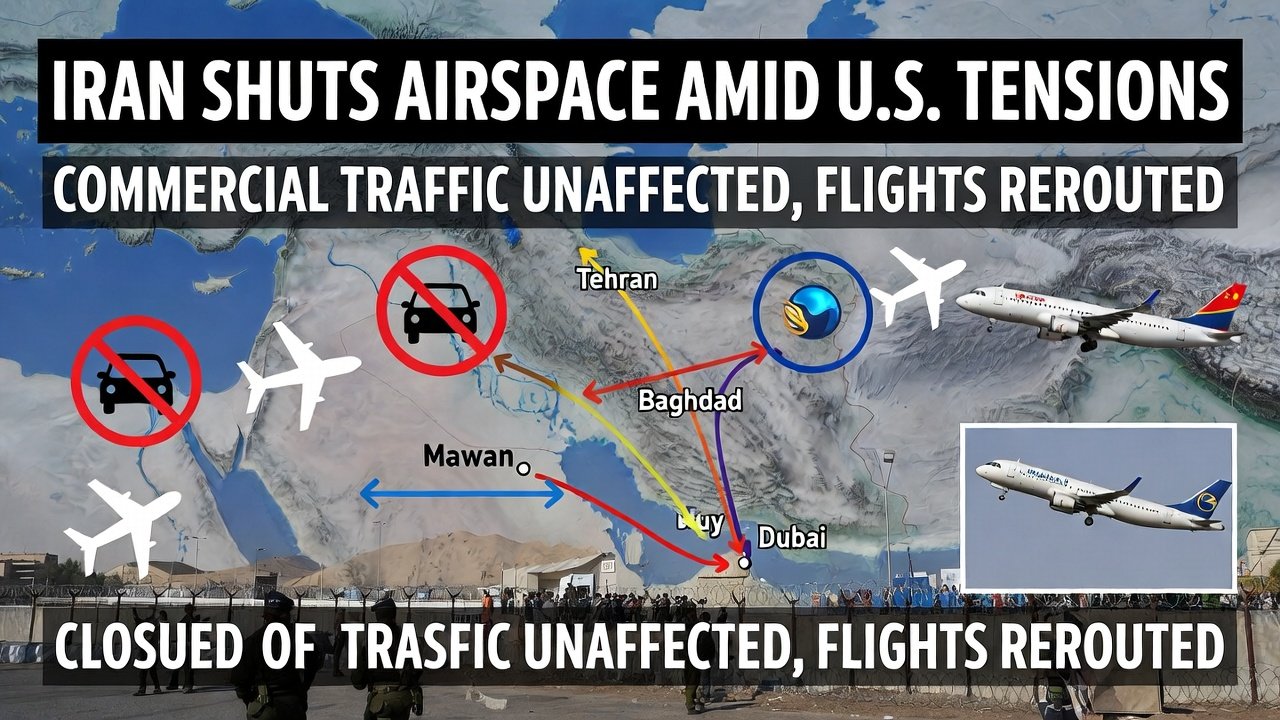
January 15, 2026 – Iran temporarily restricted its airspace to most commercial traffic early Thursday, citing security concerns amid escalating friction with the United States over the regime’s handling of widespread domestic protests. The closure, lasting several hours, forced international airlines to reroute flights and triggered widespread speculation about potential military developments. However, reports indicate that select flights—operated by Iranian carrier Mahan Air from Chinese cities—were granted permission to land in Tehran, highlighting exceptions in the restrictions and raising questions about Beijing’s role during this volatile period.
The Iranian Civil Aviation Authority issued a NOTAM (Notice to Airmen) closing the Tehran Flight Information Region (OIIX FIR) to nearly all operations, except for approved international arrivals and departures. Flight tracking platforms like Flightradar24 showed the skies over Iran largely empty during the peak restriction period, with carriers diverting routes northward or southward to avoid the area. Major airlines, including those from Europe, India, and the Gulf, reported delays, cancellations, or alternative pathing, while aviation safety sites warned of risks from heightened air defenses or possible misidentification incidents—echoing past tragedies like the 2020 downing of Ukraine International Airlines Flight PS752.
The restrictions coincided with ongoing nationwide demonstrations in Iran, where security forces have faced accusations of excessive force, leading to thousands of reported casualties according to human rights monitors. U.S. President Donald Trump has issued strong statements condemning the crackdown, hinting at possible intervention while noting assurances that planned executions had been halted. In response, precautionary evacuations of non-essential personnel occurred at U.S. bases in the region, including Al Udeid in Qatar, and several Western governments issued travel advisories urging citizens to leave Iran.
Despite the broad shutdown, a handful of flights successfully entered and landed in Tehran. Social media discussions and flight data pointed to Mahan Air services originating from Guangzhou and Shenzhen in China, which were already en route or received special clearance. Observers on platforms like Reddit noted that such long-haul arrivals from East Asia often operate on overnight schedules and were pre-authorized, distinguishing them from the general ban on overflights and unscheduled entries.
China maintains deep economic and strategic ties with Iran, including significant oil imports and cooperation in technology and infrastructure. While no official statements from Beijing addressed the flights during the closure, the episode underscores Beijing’s continued engagement even as regional airspace becomes a flashpoint. Analysts suggest these operations reflect routine commercial links rather than overt military involvement, though the timing fuels speculation about diplomatic or logistical support amid Iran’s internal crisis.
The airspace reopened by mid-morning local time, with domestic and approved international flights resuming. However, many global carriers continue to avoid Iranian routes “until further notice,” reflecting lingering caution. As protests persist and diplomatic channels remain strained, the incident illustrates how aviation can become entangled in geopolitical pressures—serving as both a barometer of tension and a pathway for select partners to maintain access.
International observers continue to monitor developments closely, with calls for de-escalation growing amid fears that prolonged instability could lead to broader regional fallout. For now, the partial exceptions to Iran’s airspace closure highlight the complex web of alliances shaping responses to the country’s unfolding challenges.