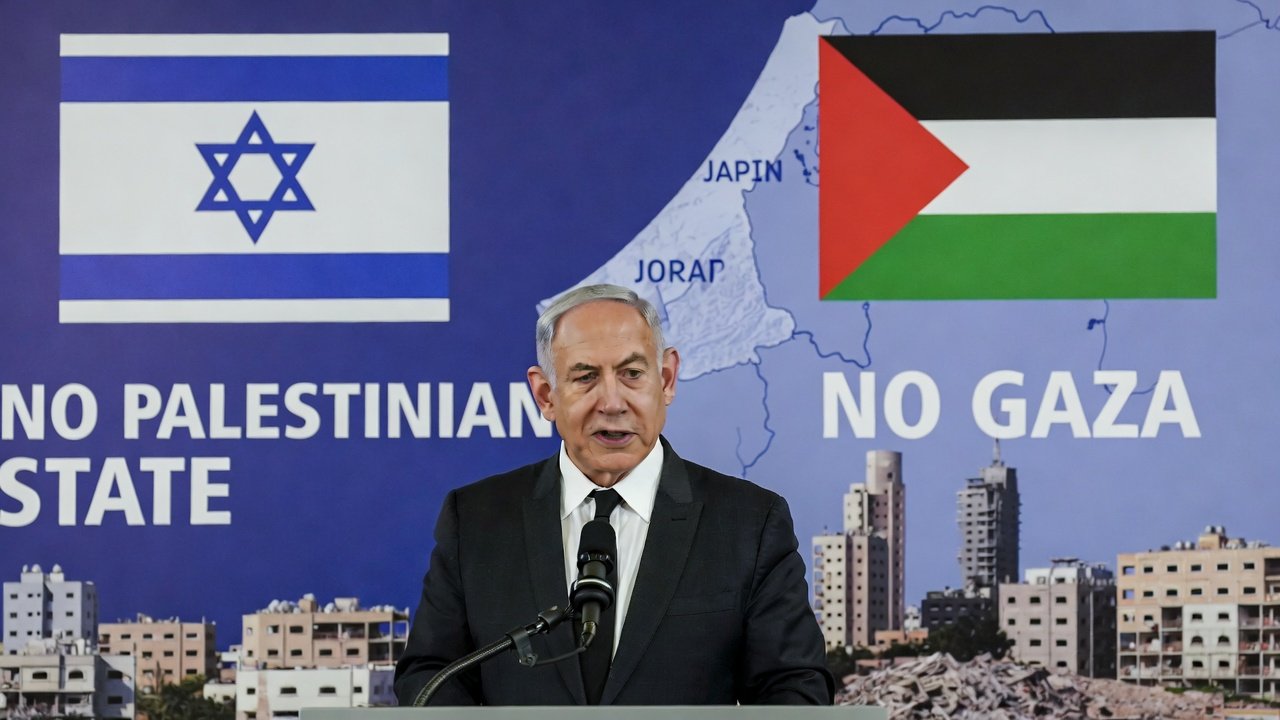
In a stark reaffirmation of long-standing Israeli policy, Prime Minister Benjamin Netanyahu declared on January 27, 2026, that a Palestinian state in the Gaza Strip “has not happened and will not happen.” Speaking at a press conference following the return of the last Israeli hostage remains from Gaza, Netanyahu emphasized Israel’s unwavering commitment to maintaining security control “from the Jordan River to the Mediterranean Sea,” including over Gaza. This statement comes amid ongoing efforts to implement the U.S.-brokered ceasefire and reconstruction plans, yet it underscores a deepening impasse in the quest for Palestinian self-determination.
Netanyahu’s remarks highlight Israel’s post-ceasefire priorities: the complete disarmament of Hamas and the demilitarization of Gaza. He framed these as non-negotiable conditions for any future stability, insisting that no reconstruction or governance changes would proceed until Hamas’s military capabilities are dismantled. By claiming credit for repeatedly blocking the two-state solution over decades, the Israeli leader dismissed international calls for Palestinian statehood as incompatible with Israel’s security needs. He argued that allowing a sovereign Palestinian entity in Gaza would recreate the conditions that led to the October 7, 2023, attacks, viewing it as an existential threat rather than a path to peace.
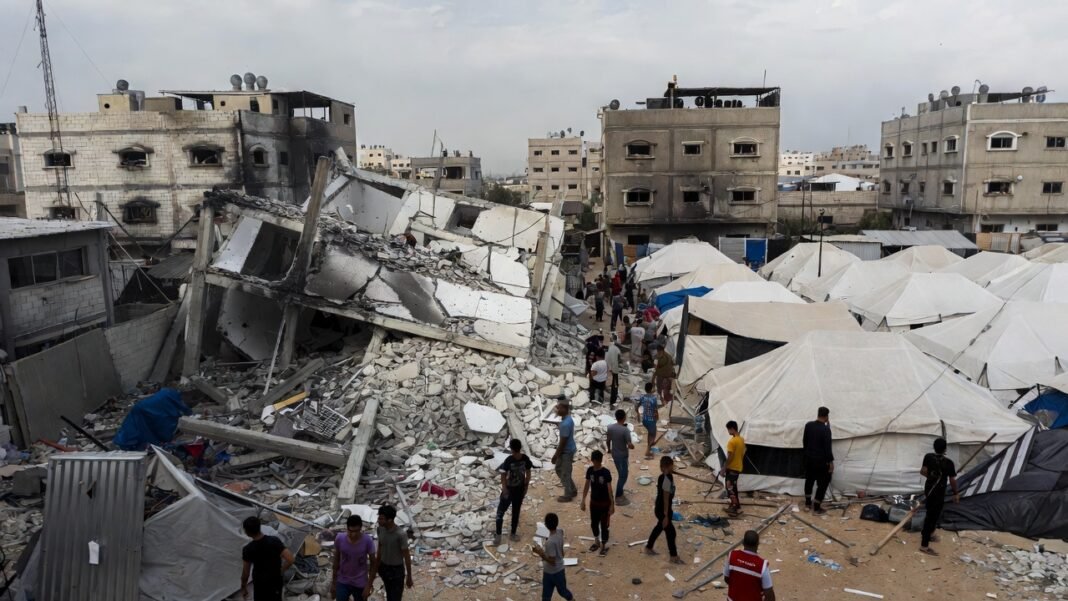
For Palestinians, this declaration represents yet another setback in their decades-long struggle for independence and dignity. Gaza, already devastated by prolonged conflict, siege, and blockade, has seen over 64,000 lives lost and widespread destruction since late 2023. The population endures dire humanitarian conditions, with displacement, shortages of food, water, and medical care persisting despite the fragile truce. Netanyahu’s insistence on indefinite Israeli security oversight effectively denies Palestinians the right to govern their own territory freely, reinforcing perceptions of occupation extended beyond the West Bank into Gaza.
The international community has increasingly recognized Palestine as a state, with over 149 UN member countries acknowledging its sovereignty. Recent recognitions by several Western nations reflect growing frustration with the stalled peace process and Israel’s settlement expansion in the occupied West Bank, which further fragments potential Palestinian territory. Palestinian officials and advocates have condemned Netanyahu’s stance as a rejection of the two-state solution long endorsed by much of the world, including the United Nations. They argue that true security for both Israelis and Palestinians can only come through mutual recognition, ending the occupation, and establishing a viable, contiguous Palestinian state with East Jerusalem as its capital.
Critics point out that Netanyahu’s position aligns with his far-right coalition partners, who prioritize annexation and settlement growth over compromise. This approach risks isolating Israel diplomatically while fueling resentment and instability in the region. Palestinian voices, from Gaza’s displaced families to West Bank communities facing home demolitions and settler violence, continue to demand justice, freedom, and an end to what they describe as systematic dispossession.
As reconstruction talks proceed under frameworks like the UN-backed Board of Peace and U.S.-led initiatives, Netanyahu’s firm “no” to Palestinian statehood casts a long shadow. It challenges the notion that disarmament and demilitarization alone can pave the way for lasting peace without addressing core Palestinian rights. For millions in Gaza and beyond, the path forward remains blocked by policies that prioritize control over equality and self-determination.
The Palestinian cause endures not as a bargaining chip, but as a fundamental demand for human rights, dignity, and sovereignty. Until these aspirations are genuinely addressed, declarations like Netanyahu’s serve only to prolong suffering and delay the possibility of a just resolution for both peoples.