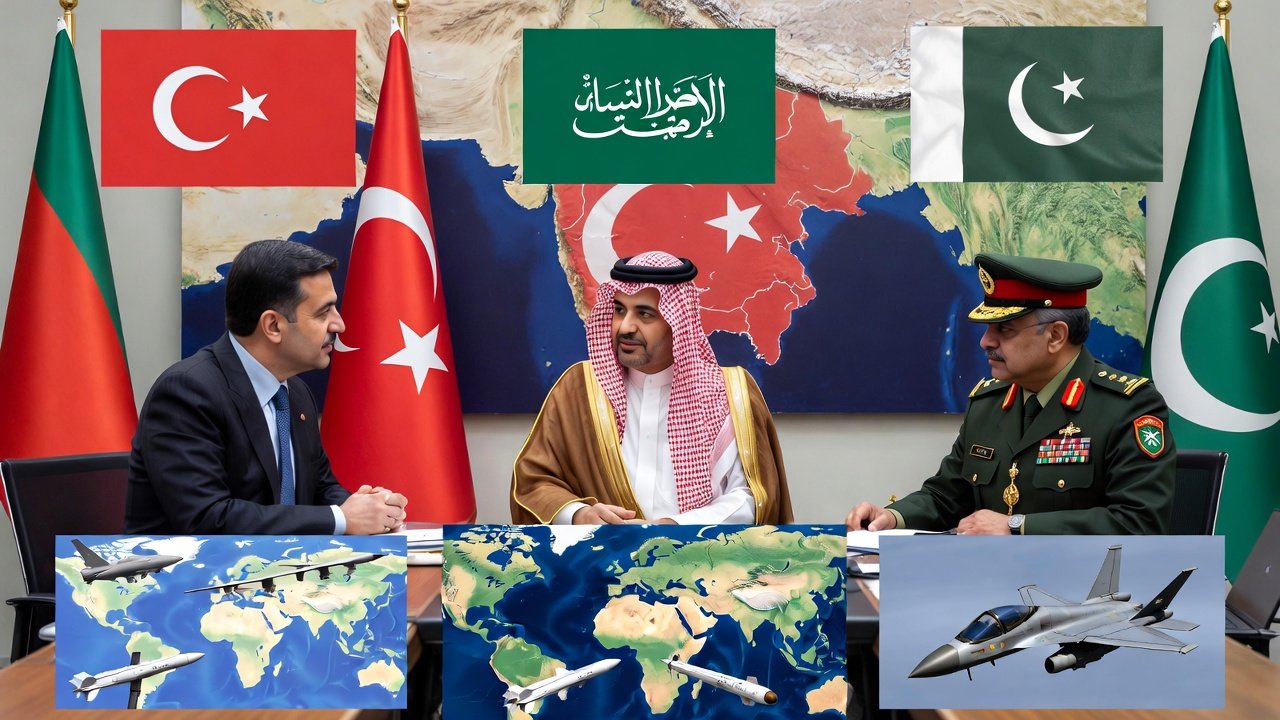
January 16, 2026 – Discussions among Turkey, Saudi Arabia, and Pakistan are advancing toward a potential trilateral defense agreement, fueling speculation about the emergence of a NATO-style security bloc among major Muslim-majority nations. Often dubbed an “Islamic NATO” by analysts and media outlets, the proposed pact would build on a bilateral Strategic Mutual Defence Agreement signed between Riyadh and Islamabad in September 2025, which includes a collective defense clause treating aggression against one signatory as an attack on both—mirroring NATO’s Article 5.
Turkish Foreign Minister Hakan Fidan confirmed on Thursday that talks have been underway for months, describing them as part of a broader effort to foster regional trust and cooperation on shared security challenges. While no formal document has been signed, Pakistani Defence Production Minister Raza Hayat Harraj revealed that a draft trilateral framework is “already in the pipeline” following nearly a year of negotiations. Sources familiar with the deliberations indicate that Turkey’s inclusion is at an advanced stage and “very likely,” according to reports from Bloomberg and other international outlets.
The emerging arrangement draws strength from each country’s unique contributions:
- Saudi Arabia provides substantial financial resources and economic leverage, positioning itself as the primary funder.
- Pakistan brings nuclear deterrence, ballistic missile capabilities, and a large, experienced military force.
- Turkey offers advanced defense industry expertise, operational experience from NATO, and a growing portfolio of indigenous military technologies, including drones and armored systems.
Analysts suggest this synergy could create a powerful non-Western security axis spanning the Middle East, South Asia, and parts of Africa, addressing common concerns such as terrorism, regional instability, and perceived shifts in global alliances. The pact reflects converging strategic interests, including responses to threats from Iran-backed groups, ongoing conflicts in Yemen, Syria, Libya, and Gaza, and uncertainties surrounding Western commitments—particularly amid debates over U.S. reliability in the region.
This development builds on existing frameworks like the Saudi-led Islamic Military Counter Terrorism Coalition (IMCTC), established in 2015 with 43 member states, including Pakistan and Turkey, to combat extremism. However, the new bilateral and potential trilateral pacts represent a more focused, mutual-defense-oriented initiative separate from the broader IMCTC.
Regional observers note that while the alliance could enhance deterrence and promote stability among participating nations, internal differences—such as past rivalries over conflicts in Yemen and Libya—may pose challenges to full integration. Geography also limits seamless collective action across vast distances. The talks have drawn attention in global capitals, with implications for broader geopolitics, including potential impacts on relations with India, Israel, and major powers like the United States and China.
Turkish officials have emphasized that the discussions aim for inclusive regional security rather than confrontation, while stressing the need for mutual confidence among neighbors. As negotiations continue, the outcome could mark a significant evolution in Muslim-world security cooperation, shifting toward greater strategic autonomy in an era of multipolar dynamics.
Whether this evolves into a formal “Islamic NATO” remains speculative, but the momentum behind the Turkey-Saudi-Pakistan axis signals a pivotal moment in reshaping alliances across the Islamic world. International monitoring of the process will likely intensify in the coming weeks as details emerge.