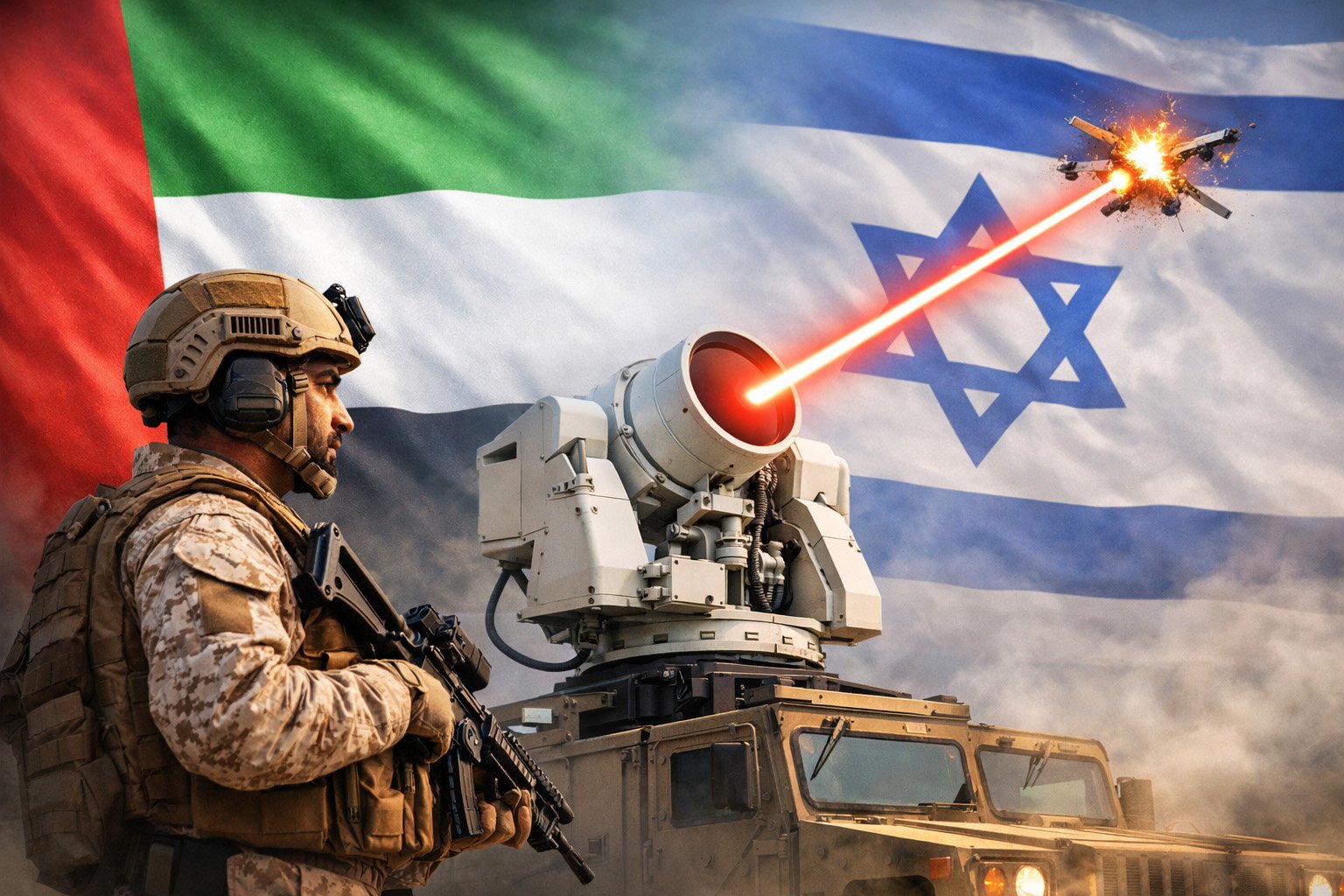
In a move that quietly signals a deeper strategic realignment in the Middle East, the United Arab Emirates has reportedly acquired advanced laser-based defence technology from an Israeli company. While the deal itself may not dominate headlines, its implications stretch far beyond weapons procurement—it reflects how security priorities are reshaping regional alliances faster than politics can publicly admit.
Laser defence systems are not just another addition to a military arsenal. They represent a new era of warfare—one where speed, precision, and cost efficiency matter more than traditional firepower. Unlike conventional missile defence systems that rely on expensive interceptors, laser weapons can neutralize drones, rockets, and short-range threats at a fraction of the cost per strike. For a region increasingly threatened by low-cost aerial attacks, this technology is a strategic advantage.
Why the UAE Is Investing in Laser Defence
The UAE has long positioned itself as one of the most technologically advanced militaries in the Arab world. From drones to cyber warfare, it has consistently invested in future-ready defence systems rather than outdated hardware. Laser technology fits perfectly into this doctrine.
With rising drone activity, asymmetric warfare tactics, and regional instability, traditional air defence systems are no longer enough. Lasers offer instant response times, minimal collateral damage, and continuous engagement capability—qualities that are especially valuable for protecting critical infrastructure such as airports, oil facilities, ports, and urban centres.
This purchase signals that the UAE is not merely reacting to threats—it is planning ahead for the next phase of modern warfare.
Israel’s Growing Role as a Defence Technology Exporter
Israel has emerged as a global leader in advanced military technology, particularly in areas like missile defence, cyber intelligence, surveillance systems, and now laser weapons. Its defence industry is built on real-world testing, constant iteration, and a doctrine shaped by persistent security challenges.
By choosing Israeli laser technology, the UAE is effectively acknowledging Israel’s edge in high-precision defence systems. This is less about politics and more about performance. In today’s security environment, effectiveness outweighs ideology.
Beyond Normalisation: A Strategic Partnership in Practice
Since the Abraham Accords, ties between the UAE and Israel have expanded rapidly—but defence cooperation marks a deeper level of trust. Military technology sharing is not symbolic; it involves sensitive data, operational coordination, and long-term dependence.
This deal suggests that normalisation is no longer just diplomatic—it is operational.
More importantly, it reflects a broader trend in the Middle East: countries are prioritising national security and technological superiority over old hostilities. Quiet cooperation is replacing loud confrontation.
Regional Implications
The acquisition is likely to unsettle regional rivals. Laser defence systems reduce the effectiveness of cheap drone swarms and rocket attacks—tactics commonly used by non-state actors and proxy forces. By neutralising these threats, the UAE strengthens its deterrence without escalating conflict.
At the same time, this move could trigger a technological arms race in the region, pushing other countries to seek similar systems or develop countermeasures.
The Bigger Picture
This is not just a story about weapons—it’s about how power is evolving in the Middle East. Control over advanced technology now defines influence more than troop numbers or rhetoric. Nations that adapt quickly will shape the region’s future; those that don’t will struggle to keep up.
The UAE’s decision to buy Israeli laser technology sends a clear message: in the new Middle East, pragmatism beats politics, and technology beats ideology.
And this shift, though quiet, may prove to be one of the most significant strategic changes of the decade.