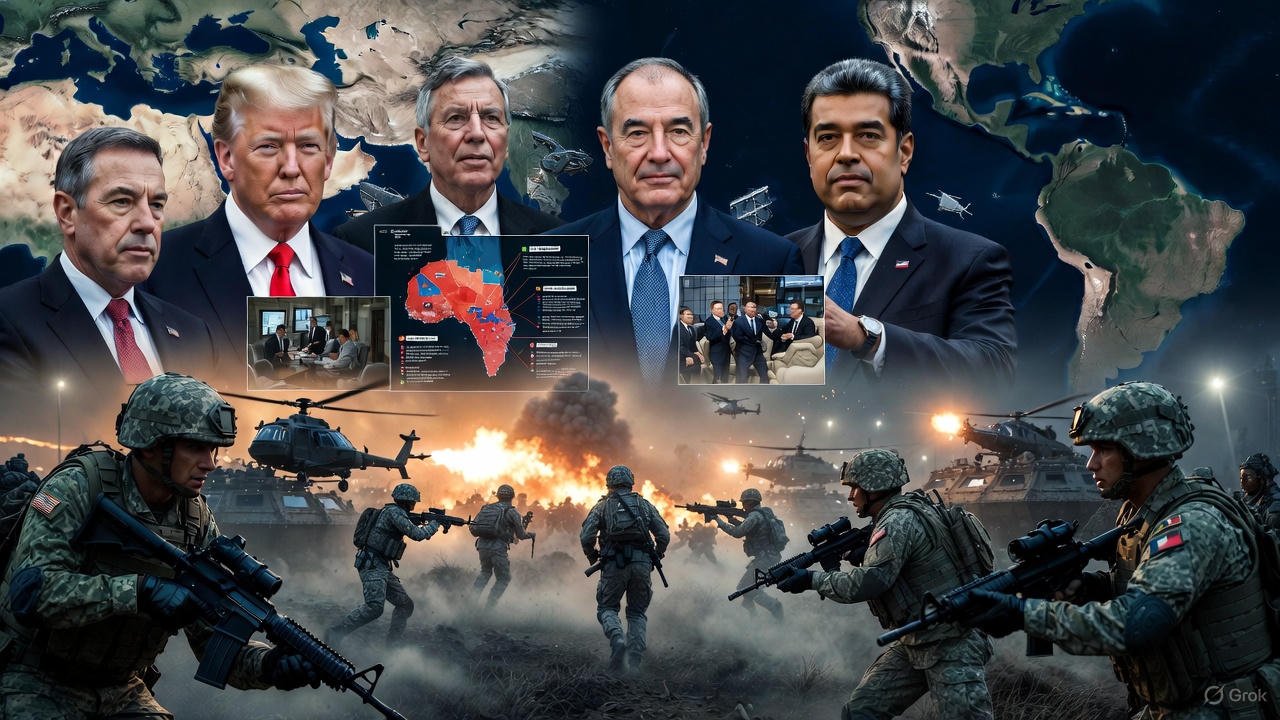
January 7, 2026 – The pre-dawn raid on January 3, dubbed Operation Absolute Resolve, has shattered the fragile post-Cold War global order. In a lightning assault lasting just over two hours, US Delta Force commandos, backed by precision airstrikes on Venezuelan air defenses and military sites, stormed President Nicolás Maduro’s fortified residence in Caracas. Maduro and his wife, Cilia Flores, were seized, blindfolded, and airlifted to New York, where they pleaded not guilty to federal charges of narco-terrorism, drug trafficking, and weapons violations stemming from indictments dating back to 2020. President Donald Trump hailed it as a “brilliant operation” from Mar-a-Lago, boasting that the US would “run” Venezuela until a “safe transition” to democracy.
But beneath the tactical triumph—zero US fatalities, six minor injuries, and Maduro’s regime decapitated in minutes—lies a geopolitical earthquake. Critics worldwide, from Moscow to Beijing, warn this brazen violation of sovereignty isn’t just “law enforcement with military support,” as the White House claims. It’s a template for gunboat diplomacy that could cascade into multi-front global conflict, pulling in nuclear-armed rivals and unraveling alliances. With Russian naval assets now shadowing US-flagged tankers off Venezuela’s coast and Chinese state media decrying “hegemonic bullying,” the operation marks not regime change in one failed state, but the opening salvo of World War III.
The Raid: A Masterclass in Shock and Awe
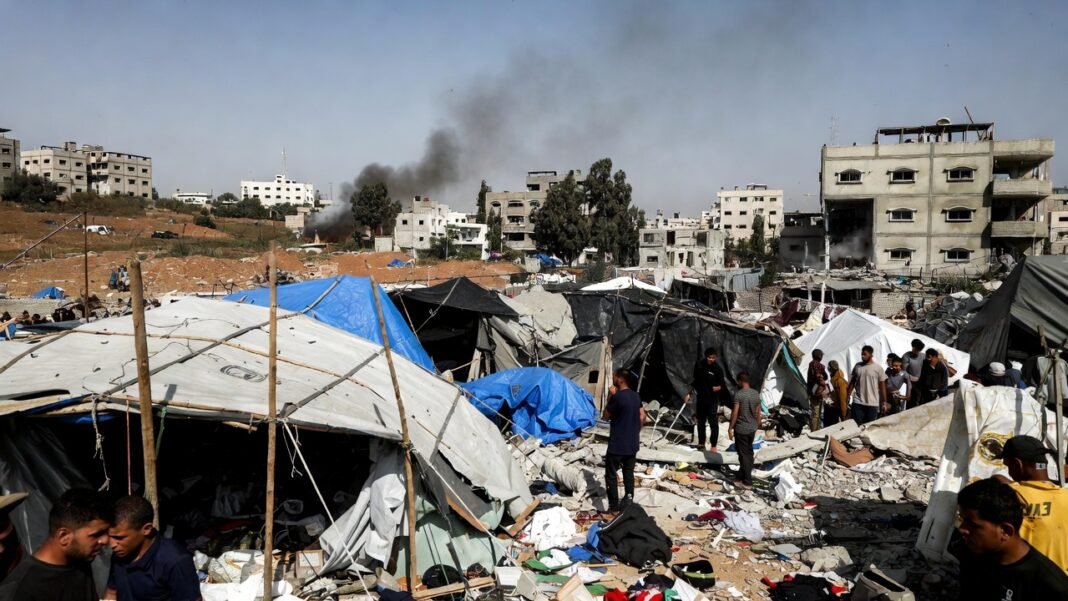
The operation unfolded with chilling efficiency. At 2:01 a.m. local time, US helicopters—launched from the USS Gerald Ford carrier group in the Caribbean—unleashed Hellfire missiles on radar sites near Higuerote airport, Fuerte Tiuna military base, and La Guaira port. Explosions lit up Caracas, killing at least 80 (per Venezuelan officials, including civilians) and crippling infrastructure. CIA assets, embedded for months, pinpointed Maduro’s location via real-time intel on his routines, even his pets.
By 4:29 a.m., the targets were aboard US aircraft “over the water,” as Joint Chiefs Chairman Gen. Dan Caine confirmed. Maduro, attempting to flee to a safe room, was dragged out; Flores sustained visible bruises. Delcy Rodríguez, Maduro’s vice president, was sworn in as acting leader by Venezuela’s Supreme Tribunal, urging calm amid blackouts and protests. Trump justified the strikes as targeting a “narco-terrorist” whose cocaine-fueled alliance with Colombia’s FARC rebels flooded US streets, while eyeing Venezuela’s vast oil reserves—previously shipped via “shadow fleet” tankers to China and Russia—to undercut adversaries’ energy lifelines.
Opposition figures like María Corina Machado celebrated, predicting 90% electoral victory, but chaos looms: 8 million refugees already displaced, potential power vacuums, and loyalist militias armed by Iran.
Global Backlash: Echoes of Hypocrisy and Escalation Fears
The world didn’t applaud. Russia branded it an “act of armed aggression,” demanding Maduro’s release and convening a UN Security Council emergency session—ironic, given its Ukraine invasion. Foreign Ministry spokespeople lamented “ideological hostility over pragmatism,” with naval forces now racing to protect the Russian tanker Marinera (ex-Bella 1) from US seizure after 17 days evading Coast Guard. China, “deeply shocked,” condemned the “blatant use of force,” vowing to safeguard its Peruvian ports, Bolivian lithium, and Venezuelan oil deals. Iran, facing its own Trump threats amid protests, called it a “flagrant sovereignty violation,” affirming ties with Caracas would endure.
Latin America erupted: Brazil’s Lula da Silva warned of an “unacceptable line” toward “chaos and instability”; Mexico, Colombia, Chile, and Uruguay issued joint rebukes for breaching the UN Charter; Cuba decried “state terrorism,” fearing it’s next after Rubio’s jabs. Even US allies hedged: France’s Macron welcomed Maduro’s fall but its foreign minister cited non-intervention; the EU voiced “alarm.” UN Secretary-General António Guterres labeled it a “dangerous precedent.”
X (formerly Twitter) buzzed with doomsaying: users speculated Russian retaliation in Ukraine or Zelenskyy snatch, Chinese moves on Taiwan, or US invasions of Mexico/Iran for resources. Nigerian analyst Bolaji Akinyemi accused Trump of “playing with World War III.” CFR’s 2026 Conflicts to Watch had flagged US-Venezuela strikes as high-risk; now, it’s reality.
| Key Reactions | Stance | Potential Implications |
|---|---|---|
| Russia | “Armed aggression”; urges release, naval moves | Escalates Ukraine sabotage; justifies NATO border provocations |
| China | “Hegemonic behavior”; opposes force | Accelerates Taiwan drills; protects LatAm investments (e.g., Brazil soy, Chile copper) |
| Iran | “Violation of sovereignty” | Bolsters proxies; eyes Khamenei safety amid Israeli warnings |
| Brazil/Lula | “Crosses unacceptable line” | Regional bloc against US; refugee surge backlash |
| Cuba | “Criminal attack, state terrorism” | Havana destabilization; migration to US spikes |
| Argentina/Milei | Supportive | Pro-US pivot; oil access hopes |
Why This Ignites WWIII: Spheres of Influence Collide
This isn’t Iraq 2.0 or a “quick pickup.” It’s the “Trump Corollary” to the Monroe Doctrine: expel Russia/China/Iran from the Americas. Venezuela was their outpost—oil evading sanctions, drones from Tehran, Wagner mercenaries, Beijing loans. Removing Maduro severs that node, but at what cost?
- Precedent for Predators: Russia, invading Ukraine, now cries foul—yet uses it to “Putinize” US policy, per Guardian analysis. Putin could snatch Baltic leaders or escalate Moldova/Georgia. Xi eyes Taiwan: if US raids Caracas unchecked, why not Beijing’s “errant province”?
- Proxy Escalation: Russian tankers vs. US Coast Guard risks naval clashes. China’s $10B+ LatAm bets (lithium, ports) face seizure. Iran, linked via oil swaps, frets over repeats—echoing Israeli “Maduro-like fate” warnings.
- Resource Wars: Venezuela’s 300B barrels were funding Russia’s Ukraine war (lower global prices hurt Putin). Trump wants it for anti-Russia/Iran leverage, but chaos could spike migration, arm cartels, derail Colombia peace.
- Alliance Fractures: Even allies like Germany (“complex legality”) waver. Chatham House warns Russia doubles Ukraine down; Reuters sees “new global ruptures.” CFR experts: no Venezuela threat justified unilateralism—hypocrisy erodes norms.
- Domestic Blowback: US streets face more fentanyl (Maduro’s cartels); 15K troops linger, inviting Vietnam 2.0. X users decry “oil grab,” “terrorist US.”
Analysts like Wolfgang Munchau (UnHerd) call it Cold War revival: spheres of influence where might trumps right. CFR’s Preventive Priorities Survey pegged Venezuela high-impact; now, Taiwan Strait/Russia-NATO (even odds) amplify risks.
The Path Forward: Transition or Tinderbox?
Rodríguez pledges dialogue but rejects “illegitimate aggression.” Starlink beams free internet; opposition rallies. Trump eyes oil pumps, but refugee floods could topple neighbors like Chile’s Kast.
WWIII isn’t inevitable—Russia/China lack projection for direct US fight, prioritizing Ukraine/Taiwan. But miscalculation looms: a sunk tanker, hacked grids, or proxy flare-up. As Bolivian lithium and Brazilian soy bind Beijing to the hemisphere, Trump’s “unpredictable” doctrine forces hedging—more arms to allies, cyber ops, or worse.
The raid ended Maduro’s misery for Venezuelans starved by hyperinflation (80% GDP collapse since 2013). But globally, it’s a Rubicon crossed. Diplomacy died at 2 a.m. in Caracas; what’s reborn may be a world at war. Analysts urge UN mediation, but with Trump eyeing Iran/Cuba next, the fuse burns short.